
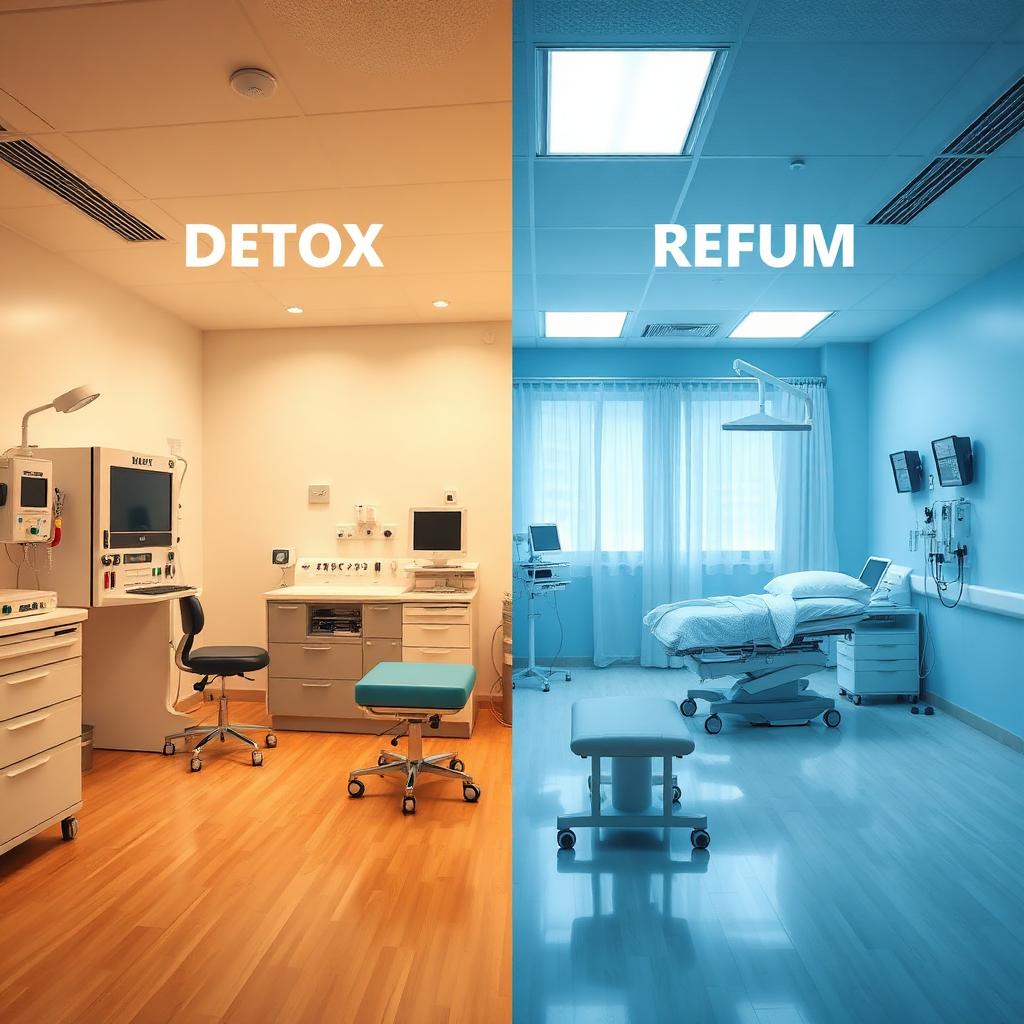
When researching addiction treatment, you will encounter the terms "detox" and "rehab" frequently—sometimes used interchangeably, though they represent very different stages of recovery. Understanding the distinction between these two phases is crucial for anyone beginning their journey to sobriety.
Simply put: detox addresses the physical aspect of addiction, while rehab addresses the psychological and behavioral aspects. Both are necessary for lasting recovery.
What is Detoxification?
Detoxification (detox) is the process of allowing drugs or alcohol to leave your body while managing the potentially dangerous withdrawal symptoms that follow. Medical detox typically lasts 3-10 days depending on the substance and severity of dependence.
During detox, medical professionals monitor vital signs, administer medications to ease withdrawal symptoms, prevent complications like seizures, and ensure patient safety and comfort. Detox can occur in a dedicated detox facility, a hospital setting, or as the first phase of a residential treatment program.
What is Rehabilitation (Rehab)?
Rehabilitation is the therapeutic process that addresses why you developed an addiction and teaches you how to live without substances. Rehab typically lasts 28-90 days or longer and includes individual and group therapy, education about addiction, development of coping skills, treatment of co-occurring mental health conditions, relapse prevention planning, and preparation for life after treatment.
Why Detox Alone Is Not Enough
A common and dangerous misconception is that completing detox means you are "cured." In reality, detox only addresses physical dependence—it does nothing to change the thoughts, behaviors, and circumstances that led to addiction in the first place.
Research consistently shows that individuals who complete only detox have significantly higher relapse rates than those who continue with rehabilitation. Detox is the necessary first step, but rehab is where recovery truly begins.
The Treatment Continuum
Comprehensive addiction treatment follows a continuum: medical detox (3-10 days), followed by residential/inpatient rehab or PHP (30-90 days), then intensive outpatient (IOP) or outpatient treatment, and finally ongoing aftercare and support. This step-down approach provides intensive support early in recovery when relapse risk is highest, gradually transitioning to less intensive care as you build recovery skills.
Choosing Integrated Treatment
Many treatment facilities offer both detox and rehab services, providing seamless transitions between levels of care. When evaluating programs, look for facilities that can manage your detox needs medically and provide comprehensive rehabilitation services. This continuity of care produces better outcomes than transferring between separate facilities.
Share this article:
Related Articles
Continue exploring topics related to this guide.
Detox Timeline: What to Expect During Withdrawal
A detailed look at withdrawal timelines for different substances and what happens during medical detox.
10 min read
Dual Diagnosis: Understanding Co-Occurring Disorders
How mental health conditions and addiction interact, and why integrated treatment is essential.
9 min read
Medication-Assisted Treatment (MAT): What You Need to Know
Understanding how medications like Suboxone and Vivitrol support addiction recovery.
11 min read
Relapse Prevention: Strategies for Lasting Recovery
Proven techniques and strategies to prevent relapse and maintain long-term sobriety.
11 min read
What to Bring to Rehab: The Complete Packing List for Inpatient Treatment
A room-by-room packing list for residential rehab — what to pack, what to leave home, and what facilities almost always provide.
10 min read
Is Rehab Confidential? Understanding Your Privacy Rights in Addiction Treatment
Learn how federal laws protect your privacy during addiction treatment, including employer protections, background checks, and insurance confidentiality.
8 min readYou May Also Like
Essential Guides
Comprehensive resources to support your recovery journey.
Helpful Resources
Explore more guides and treatment information.